LEARN THE RULES OF THE ROAD
Practice questions for Japan's license conversion written test
The written test for converting a foreign driver's license in Japan (外免切替) is a set of true/false questions on Japanese road-traffic law. This site lets you practice six road-rule topics — five questions each, every one with an explanation that names its basis in law.
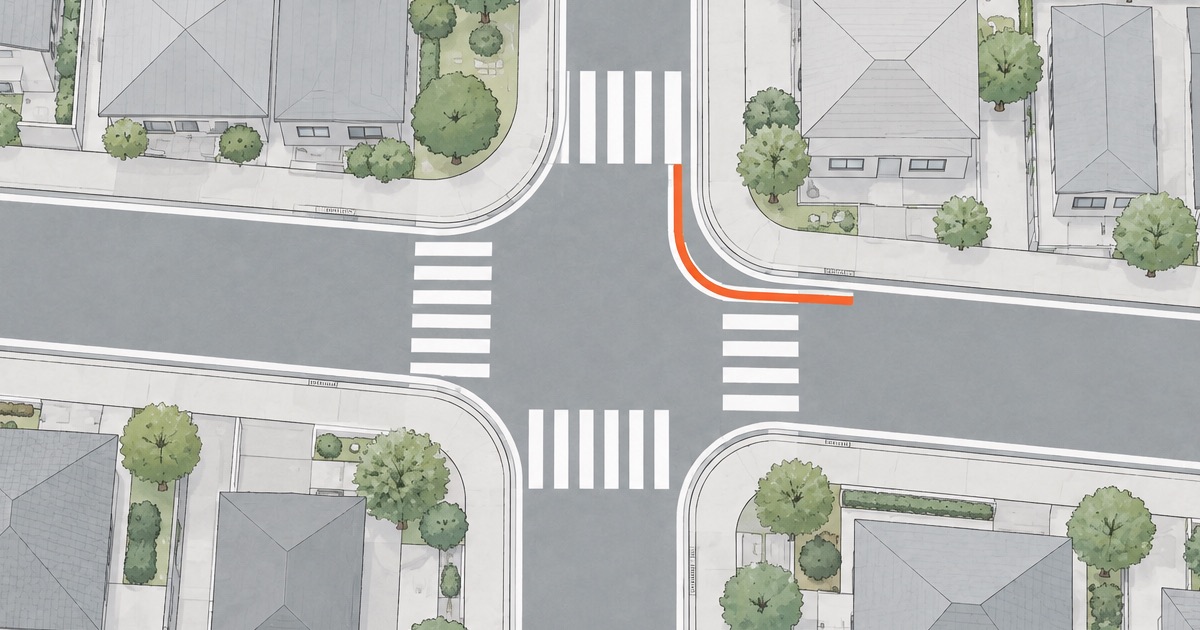
Pay attention to rules that may differ from those in your home country: the duty to come to a full stop at an unsignalised pedestrian crossing, who has priority where two roads of different widths meet, the exact distances that make parking illegal. The items worth drilling are precisely the ones your home country handles differently.
Start with a topic below. The questions stick better if you commit to an answer before you open the explanation.
Practice by topic
-
Signs & Markings
These questions help you practice reading Japanese signs and markings. You need to read meaning from shape and colour across the four sign families — regulatory, instruction, warning and guide — plus the markings painted on the road surface.
-
Traffic Signals
Signal questions concentrate on three things: what a yellow light actually requires of you, how flashing signals differ from steady ones, and what an arrow signal permits.
-
Pedestrian Protection
These questions cover the rules that protect people on foot. The core duties are stopping at an unsignalised crossing when somebody is crossing or clearly about to, the ban on overtaking or passing within 30 metres before a crossing, and slowing to a safe speed and leaving a safe gap when you pass near pedestrians.
-
Intersections & Right-of-Way
Intersection questions are right-of-way questions. Where there is no signal and no sign, the vehicle coming from your left has priority. Where the two roads are obviously different widths, the wider road has priority. Where a priority-road sign is posted, the sign settles it.
-
Speed & Distance
Speed questions start from a principle rather than a number: a maximum speed binds you whether or not a sign is posted, and an empty road never raises it. What the statutory limit actually is depends on the type of road you are on.
-
Parking & Stopping
A short stop can still count as parking (駐車). Waiting continuously for passengers or cargo can be parking even with the driver present. Leaving the vehicle so that you cannot drive it away immediately also counts, however brief the stop. Stopping (停車) means a stop that does not meet the legal definition of parking.